What does this page help me decide?
It helps you decide whether your main problem is AI citation readiness—schema, entity clarity, answer formatting, and trust structure—or whether the business first needs broader site, content, or ongoing SEO work.

AI search now shapes who gets summarized, cited, and recommended before a click happens. Whether you call it AI search optimization, a GEO agency engagement, AI SEO services, or a one-time AIO provider, the goal is the same: make your business easier for ChatGPT, Perplexity, Gemini, Claude, Copilot, and Google AI Overviews to classify, trust, and recommend. We handle that with a fixed-scope project, not a monthly retainer. The longer structural gaps stay in place, the easier it is for competitors to become the default recommendation layer first. Backed by a deliverable completeness guarantee. Review guarantee terms.
Methodology references: Google Search Central on AI features, Google's structured data guidance, and our AI-First SEO Framework.
Available nationwide — for local businesses, national brands, agencies, and teams that want to get recommended by ChatGPT before a click ever happens.
Want to review who actually does the work first? Meet Matt LaClear, see the team, review the public media and authority assets, or listen to the Rankings and Retainers podcast.
Quick answer
This page helps you decide whether a one-time AI optimization project is enough to make your business easier for answer engines to classify, cite, and recommend—or whether you really need broader monthly SEO + GEO support first.
Use it to compare fit, methodology, pricing, guarantee boundaries, and provider model differences before booking. If you are still sorting the first move, compare SEO + GEO, web design, and AI optimization pricing side by side.
Prefer to evaluate first?
Use the shortest diligence path first: jump to methodology, compare scope, inspect guarantee boundaries, and share the right support pages internally before you book.
13,277+
Campaigns
6
AI Platforms
100%
Human-Led
1x
Fixed Project
100%
Completeness Guarantee

On this page
If you are evaluating AI search optimization services, a GEO agency engagement, or a one-time generative engine optimization service, this page is organized so you can jump directly to fit, methodology, pricing, industry relevance, and FAQ details.
Common Follow-Up Questions
This is the pre-pricing orientation layer: what the page helps decide, what stakeholders should compare, and what to bring if the consultation needs to turn into a practical scope conversation fast.
It helps you decide whether your main problem is AI citation readiness—schema, entity clarity, answer formatting, and trust structure—or whether the business first needs broader site, content, or ongoing SEO work.
Compare the pricing tiers, provider-fit section, guarantee terms, and methodology so stakeholders understand both scope and limits.
Bring your priority prompts, target markets, key service pages, and examples of competitors showing up in AI answers. That makes the consultation about concrete visibility gaps instead of abstract hype.
Context
The businesses that benefit most from AI search optimization usually already have real expertise, real offers, and real buyer demand — but they are still hard for answer engines to cite confidently. This page is designed for teams comparing a GEO agency, AI SEO services, or a one-time AIO provider and wanting to understand when that investment makes sense.
The Shift
Search changed. AI platforms do not just link to websites — they synthesize answers from the sources they trust most. If your site is not structured for AI comprehension, entity clarity, and answer extraction, you are leaving demand on the table where more buying journeys now begin.
ChatGPT, Perplexity, and Google AI Overviews increasingly answer questions directly — without sending users to your site. Getting cited in those answers is the new visibility.
AI doesn't guess. It pulls from structured, authoritative, entity-rich content. If your site speaks AI's language, you get recommended. If it doesn't, your competitors do.
Some businesses are already restructuring content, tightening markup, and clarifying entity signals for AI-driven discovery. Waiting usually makes it harder to catch up once those foundations are in place.
More buyers are using AI tools to compare providers, summarize options, and shortlist who to contact next. If your brand is missing from those answers, you can lose visibility before a site visit happens.
Structured data is how AI understands what your business does, where you operate, and why you're trustworthy. Most sites have incomplete or missing schema.
Unlike a retainer-first model, this work focuses on structural upgrades that remain on the site after launch. The implementation lasts; the competitive environment still changes, which is why some businesses choose follow-up reviews later.
Scope
Every package is built on the same proven framework — the tier determines depth, number of pages, and level of authority building. The through-line across all tiers is that these AI SEO services improve how answer engines interpret the brand, the service, the geography, and the proof on the page.
We scan your brand across ChatGPT, Perplexity, Gemini, AI Overviews, Copilot, and Claude to establish a baseline and find gaps.
See how often your competitors get cited vs. you. Identify the specific content and structural advantages they have.
Implement entity-appropriate schema such as Organization or ProfessionalService, Service, FAQPage, HowTo, and BreadcrumbList so search systems can classify the page, the business, and the user path correctly.
Update robots.txt for GPTBot, ClaudeBot, PerplexityBot, and GoogleOther. Optimize sitemaps. Ensure AI can access your content.
Rewrite key pages into chunk-friendly format with direct answers, clear heading hierarchy, entity-rich language, and FAQ sections.
Create new pages designed to be AI-citable — neutral tone, data-backed claims, direct answers, and authoritative sourcing.
Make your brand a recognized entity with consistent name, description, and signals across the web and knowledge graphs.
Optimize Google Business Profile signals so AI platforms recommend you for local queries in your service area.
Implementation
We test how the brand appears across the target AI systems, identify missing entity signals, and document the pages that need restructuring first.
Schema, crawlability, content chunks, FAQ patterns, and authority gaps are organized into a rollout order so the implementation is controlled instead of random.
We execute the approved changes on the pages included in your tier, validate before-and-after status, and keep the work inside the fixed project scope.
You receive the completed deliverables, validation notes, and the next best recommendation — either quarterly review or pairing with SEO + GEO.
Recommendation Layer
Businesses do not get recommended by ChatGPT because they added one magic tag. They get recommended when the page makes classification easy, backs important claims with clear context, and connects supporting proof in a way that answer engines can reuse without inventing missing details.
A strong AI search optimization page explains the service, the buyer, the geography, and the delivery model in direct language. That helps answer engines classify the business correctly instead of guessing from vague marketing copy.
Schema, heading hierarchy, FAQs, breadcrumbs, and internal links create reliable boundaries around the answer. This is where AI SEO services and a disciplined generative engine optimization service differ from a simple copy refresh.
Recommendation systems favor pages that are easier to trust. Experience signals, named methodology, consistent entity references, and linked proof assets all increase the odds that the business can be cited rather than ignored.
When someone asks an AI platform for the best provider, who to trust, or who serves a niche market, the page has to do more than mention the service. It has to explain the offer in chunk-friendly language, surface the right proof, and make it easy for the model to connect the answer to the brand.
That is why this page leans so heavily on service definitions, implementation details, FAQs, and cross-links to proof assets like the AI-First SEO Framework, the AI Content System, the AI E-E-A-T trust-signal guide, and the public media and authority assets.
The most common blockers are weak page structure, generic claims, missing schema, poor entity consistency, and shallow explanations that never answer the buyer's real question. A GEO agency or AIO provider should be able to show exactly how those blockers are diagnosed and fixed — not just promise better visibility.
If your page already has decent authority but weak recommendation visibility, this is the layer where AI search optimization services usually create the biggest lift. It is also why buyers inspect the team structure, review the public Authority First and media footprint, and use the podcast as a shorthand check on whether the operating logic sounds credible.
Fit
Not every business needs the same engagement model. Some need a focused generative engine optimization service to fix structural gaps on the site. Others need ongoing SEO + GEO because the core problem is not just recommendation visibility — it is also rankings, content depth, and compounding organic growth.
Need help choosing the right path? Compare SEO vs AI optimization vs web design if you are still sorting the first move, or review the monthly SEO + GEO service if the site needs ongoing growth beyond a one-time AI search optimization service.
Pricing
One-time fixed-price projects. No monthly retainers. No lock-in contracts. Clear scope before implementation starts.
Price context
Typical agency / GEO retainer
$3,000-$10,000/mo
Recurring monthly spend is common even when the first priority is structural cleanup, schema repair, and answer-formatting work.
This offer
$2,100-$7,350 once
You pay for a defined implementation scope instead of signing up for another open-ended month on retainer.
Buyer takeaway
For many businesses, that means getting the structural AI visibility work done before committing to another month of recurring agency fees.
Market-rate comparison is directional, not a quote. Final fit depends on site condition, scope, and approval speed.
$2,100 one-time
Essential AI optimization for businesses that need a strong foundation across all AI platforms before deciding on deeper ongoing work.
Delivered in ~2 weeks
Best fit if you need citation-ready fundamentals, cleaner markup, and a fast answer on whether a broader SEO + GEO program should come next.
Most Popular
$4,200 one-time
Comprehensive optimization for businesses ready to become the source AI trusts and recommends without moving into full enterprise scope.
Delivered in ~4 weeks
Most teams choose this tier when they need enough page depth to influence recommendation visibility without paying for a full-site rebuild.
$7,350 one-time
Full-scale AI optimization for market leaders who want to own the AI-generated answers in their industry.
Delivered in 6–8 weeks
Need billing flexibility?
Larger scopes can be split into milestone payments so invoice timing stays aligned with implementation phases. Exact terms are confirmed before work begins.
All packages are one-time fixed-price projects with custom scoping available for enterprise or multi-location needs. Larger scopes can use milestone billing during scoping so payment lines up with delivery phases. Book Free Consultation to identify which tier fits your goals.
Guarantee clarity: This service includes a deliverable completeness guarantee — not a money-back guarantee. If a scoped deliverable is incomplete, we finish the remaining work at no added cost per the written guarantee terms.
Proof checkpoint: Validate fit by reviewing the implementation process, the team structure, the public media and authority assets, the podcast, our guarantee terms, the guarantee comparison guide, and the FAQ before selecting a tier.
Process
The short version is audit → architecture → implementation → verification. The part most providers skip is the actual methodology inside each layer. AI visibility is usually lost through weak page structure, unclear entities, unsupported claims, or markup that does not match the visible page — not because one magic tag was missing.
Google's AI features documentation is explicit: there are no extra AI-only requirements to appear as a supporting link in AI Overviews or AI Mode. The real work is making pages indexable, text-accessible, internally connected, and structurally clear enough that search systems can interpret and reuse them with confidence.
References: Google Search Central — AI features and your website; Introduction to structured data markup.
Methodology Deep Dive
We run prompt-based tests across target platforms, document which pages get cited today, and compare those answers with the pages your competitors are using to earn inclusion.
We match markup to the real page type so the business, service, FAQ content, and breadcrumb path are easier to classify. That usually means fewer but more accurate schema objects — not random markup stuffing.
"Chunk-friendly" means the page can be split into direct-answer blocks without losing context. We rewrite dense marketing copy into sections that are easier to quote, summarize, and support with linked evidence. If you want to see how those publishing controls work in practice, review the AI Content System.
Entity work reduces ambiguity about who the business is, what it does, and which version of the brand should be trusted. This is where consistent naming, service-area clarity, and profile alignment start to matter, and where the authority-first thinking behind the public Authority First and media route starts to reinforce the visible proof on the page.
Verification is where most "AI optimization" offers get vague. We document what was changed, what was validated, and what should be monitored next so the work is not just claimed — it is reviewable.
Before
"If your business is hard for AI systems to classify, cite, or compare accurately, start by making the page easier to understand: clarify the service, the location, the evidence, and the people behind the work so answer engines have cleaner context to reuse."
After
How do you improve AI citation potential for a service business?
Start by making the page easier to classify and quote. That usually means adding accurate service and entity markup, rewriting the opening section into a direct answer, separating FAQ-style subtopics under clear headings, and supporting high-stakes claims with named sources or proof assets.
On the same page, we would also clarify who performs the service, where it is offered, and which supporting resources explain the method in more depth, so the page is easier for AI systems to summarize without inventing context.
Selected references
Google Search Central
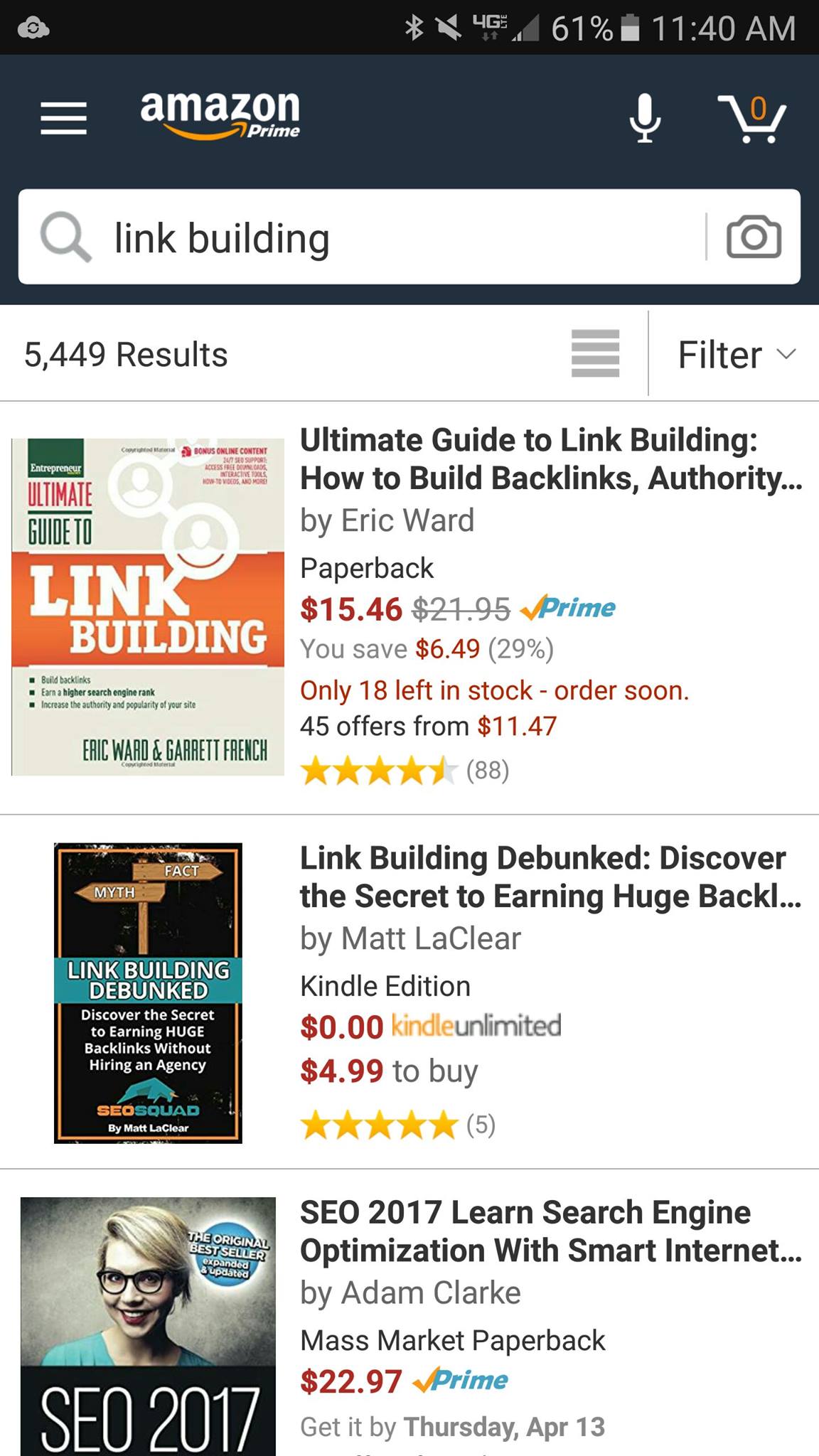
Marketplace credibility: before the framework evolved into Authority First, Matt LaClear's first-edition book reached the #2 Amazon result for “link building.” For AI optimization, that works best as supporting authority context beside the methodology, media route, and public proof assets—not as a top-of-page centerpiece.
Failure-mode prevention
Most AI visibility losses do not come from missing one magical setting. They come from pages that are hard to classify, hard to quote, hard to trust, or hard to connect to supporting evidence. This is the layer the implementation is designed to fix first.
Answer engines trust pages less when markup is thin, inaccurate, or disconnected from the live content. The fix is not adding more random schema types — it is matching valid markup to the actual page purpose and verifying it against the visible copy before launch.
Generic hero copy and vague marketing claims are hard to quote. We rewrite the page into direct-answer chunks with cleaner headings, scoped claims, and FAQ support so the service can be summarized without the model inventing missing context.
If the business description, operator identity, service areas, and proof assets do not reinforce the same story, recommendation systems have less reason to cite the brand confidently. That is why this work ties service pages back to team, media, FAQ, and methodology assets instead of treating each page as isolated copy.
A claim becomes easier to trust when the page can route to proof, safeguards, or deeper methodology. Internal links to the framework, guarantee terms, support content, and related services give the answer engine somewhere concrete to trace instead of leaving the statement unsupported.
Next Step
Use this as the buyer handoff: pick the route that matches whether you need scope clarity, safeguard review, or a direct strategy conversation first.
Comparison
Most buyers are not comparing vague "AI agencies" in the abstract. They are comparing delivery models, monitoring expectations, verification depth, and whether agency-friendly support exists after the project is done. Use this table to compare a one-time AI search optimization implementation against a more common retainer-first provider model.
The biggest pricing mistake buyers make is comparing a one-time structural implementation to an open-ended monthly retainer as if they solve the same problem on the same timeline.
Focus on pricing clarity, implementation ownership, payment flexibility, guarantee boundaries, and whether the provider can explain when ongoing SEO + GEO is still the better fit.
If you mainly need structural AI visibility fixes, a one-time scope is often the faster starting move. If you need compounding rankings and publishing cadence, the retainer model may still win.
| Criteria | Matt LaClear AI Optimization | Common retainer-first AI provider |
|---|---|---|
| Engagement Model | One-time fixed-scope implementation with defined deliverables | Recurring monthly engagement with scope evolving over time |
| Pricing Clarity | Published one-time tiers with clear scope before work begins | Pricing and deliverable depth often vary by proposal and ongoing scope |
| Budget Pace | One-time investment designed to complete the structural work first, with milestone billing available on larger scopes | Monthly spend continues while implementation depth, pace, and expansion priorities evolve over time |
| AI Platforms Covered | ChatGPT, Perplexity, Gemini, AI Overviews, Copilot, and Claude | Platform coverage varies by provider, reporting stack, and package level |
| Methodology Transparency | Public process covering audit, schema, content restructuring, entity work, and verification | Method details are often summarized at a higher level until after onboarding |
| Implementation Ownership | Human-led strategy with AI-assisted research, a senior-led specialist team, and approval before major live changes | Execution ownership can vary across strategists, account managers, and production teams |
| Schema + Entity Depth | Entity-aligned implementation matched to page eligibility and visible content | Can range from basic templates to deeper custom implementation depending on scope |
| Content Restructuring | Pages rewritten for chunk-friendly retrieval, direct answers, and citation support | May range from strategic rewrites to lighter optimization passes |
| Verification + Delivery Notes | Before/after notes, markup validation, crawl checks, and next-step guidance at delivery | Reporting style varies by provider and may focus more on ongoing activity summaries |
| Ongoing Monitoring | Core optimizations stay in place after delivery, with optional quarterly review or monthly SEO + GEO for continued monitoring | Continued monitoring is usually bundled into the recurring engagement |
| White-Label Available | Yes — agency-friendly support is available for teams that want white-label GEO execution | Availability varies; some providers support resale, others focus only on direct clients |
| Fit Guidance | Will recommend web design or ongoing SEO + GEO first if a one-time AI project is not the right starting move | Fit guidance often follows the provider's core engagement model and service mix |
| Guarantee Terms | Deliverable completeness guarantee with written guarantee terms and explicit non-refund clarity | Guarantees are often limited, custom, or not published in detail |
Need help comparing the right next move? Review monthly SEO + GEO if ongoing monitoring matters most, inspect the written guarantee terms if safeguards are the main concern, compare the one-time pricing tiers if budget pacing is the question, or book a free consultation if you want to compare business-owner and white-label agency fit before deciding.
Objections
No. SEO focuses on rankings; this service focuses on interpretability, citation-worthiness, and recommendation eligibility inside AI-generated answers.
The structural work does. What changes over time is the competitive environment, which is why some brands pair this with quarterly reviews or monthly SEO + GEO.
Platforms re-index at different speeds, so the right expectation is staged improvement over weeks, not instant universal visibility on day two.
Because many businesses first need structural AI visibility work completed cleanly: schema repair, content restructuring, entity clarity, and crawlability. A fixed-scope project lets you solve that layer before deciding whether ongoing SEO + GEO is still necessary.
Yes. Larger scopes can use milestone billing so payment lines up with implementation phases instead of forcing everything into one invoice window.
No. The written safeguard is a deliverable completeness guarantee, not a money-back guarantee. If a scoped deliverable is incomplete, the remaining work gets finished at no additional cost.
Then we will say so. Some businesses should start with web design or pair the work with SEO + GEO instead of forcing AI optimization onto a weak foundation.
That concern is fair. This is why the team, operator background, public media and authority assets, and the podcast are easy to inspect before you commit.
Still comparing the first move? Use pricing for budget pacing, guarantee terms for risk clarity, monthly SEO + GEO for ongoing-growth needs, or book a strategy call if you want the right path mapped to your site before committing.
6 Platforms
Guaranteed coverage
100%
Deliverable completeness
Human-Led
Every optimization
Verticals
Different industries trigger different recommendation behaviors. A strong GEO agency or AI SEO services partner should be able to explain how entity clarity, trust signals, and answer formatting change by vertical instead of pretending every market needs the exact same page structure.
Clarify practice areas, attorney expertise, jurisdictions, and FAQ-style answers so legal service pages are easier for AI systems to summarize without blurring specialties.
Strengthen provider bios, treatment explanations, location signals, and trust language so healthcare pages are clearer, safer, and more recommendation-ready.
Improve service-area clarity, emergency-response messaging, review support, and direct-answer copy so local recommendation prompts have stronger evidence to pull from.
Differentiate the offer with frameworks, outcomes, and audience-fit explanations so the page reads like a credible specialist rather than a generic expert-for-hire.
Tighten credential clarity, service descriptions, and trust-sensitive claim support so recommendation engines can understand the advisory role without confusion.
Use neighborhood, service, and buyer/seller-specific content clusters that make local relevance more obvious in both traditional search and AI answer surfaces.
Build better solution pages, comparison content, and implementation explanations so product-led brands earn more citation-worthy coverage for high-intent questions.
Clarify product categories, policy pages, and brand trust signals so AI systems can reuse product and brand information with fewer gaps.
Help menus, booking information, location details, and amenity answers become easier to interpret for AI recommendations and local discovery prompts.
Support agencies that want white-label GEO execution, clearer service explanations, and stronger methodology pages before they resell AI visibility work.
Turn generic service pages into direct-answer assets that explain scope, proof, and buyer fit more clearly for recommendation and shortlist-style prompts.
Combine service-area pages, Google Business Profile signals, and entity-consistent location details so local AI recommendations are easier to earn.
Support
Buyers comparing a GEO agency, a generative engine optimization service, or a broader SEO retainer usually need proof before they book. These resources explain the framework, the content standards, and the service-order logic behind the offer.
Review the authority and experience model behind the implementation.
See how content quality controls, linking rules, and staged rollouts reduce risk.
See how credibility, named experts, and trust signals make recommendation paths easier to defend.
Review how to use AI-assisted drafts without flooding the site with low-trust content.
Use the decision guide to choose whether AI search optimization is the right first move.
FAQ
Use the FAQ for the final round of diligence: definitions, timing, cost, guarantee boundaries, engagement model, and how AI optimization should relate to broader SEO.
AI Search Optimization — also called Generative Engine Optimization (GEO) or AI Optimization (AIO) — is the process of restructuring your website so AI platforms like ChatGPT, Perplexity, Gemini, and Google AI Overviews can understand, recommend, and cite your business when users ask relevant questions.
Traditional SEO focuses on ranking in standard search results. AI SEO services focus on making your business easier for answer engines to classify, summarize, cite, and recommend inside AI-generated responses. The strongest programs usually combine both, which is why this service complements — not replaces — our SEO + GEO offer.
A GEO agency audits how search engines and AI systems interpret your brand, then improves the page structure, schema, entity clarity, internal linking, crawl access, and answer formatting that influence whether your business can be cited and recommended. In practice, that means turning vague marketing pages into evidence-backed, retrieval-friendly pages that are easier to trust and quote.
AI SEO services help you get recommended by ChatGPT by improving how clearly your site explains the business, the service, the geography, and the proof behind important claims. That usually includes direct-answer copy, better heading structure, valid schema, stronger entity signals, and internal links to supporting evidence so the brand is easier to summarize with confidence.
We optimize for ChatGPT, Google Gemini, Google AI Overviews, Perplexity, Microsoft Copilot, and Claude. The strategies benefit all AI platforms because they center on structured data, entity clarity, and authoritative content.
No. This is a one-time, fixed-price project. You pay once, we deliver the scoped optimizations, and your site is structurally improved for AI search. No ongoing fees or lock-in contracts unless you later choose additional support.
A business should hire a generative engine optimization service when the site already has a reasonable foundation, but AI platforms still fail to mention, cite, or recommend the brand for relevant prompts. It is especially useful when buyers are using AI tools to compare providers before they ever click through to a website.
A one-time AIO provider is often enough when the main problem is structural: missing schema, weak entity clarity, poor answer formatting, and low citation readiness on important pages. Monthly SEO + GEO is usually the better fit when you also need ongoing content production, link earning, ranking growth, and repeated iteration as competitors continue to adapt.
AI platforms update their knowledge at different intervals. Timing varies by platform, crawl frequency, and site condition. Some businesses begin seeing improved citation or recommendation visibility within 4–8 weeks after implementation, with additional change possible as systems recrawl and reinterpret the updated content.
Packages start at $2,100 for AI Visibility, $4,200 for AI Authority, and $7,350 for AI Dominance. All are one-time fixed-price projects. Larger scopes can use milestone billing during scoping so payment lines up with delivery phases. See transparent pricing or book a consultation for a custom recommendation.
Yes. Larger scopes can be split into milestone payments so invoice timing stays aligned with implementation phases. Exact billing terms are confirmed during scoping before work begins.
No. This is a deliverable completeness guarantee, not a money-back guarantee. If a scoped deliverable is incomplete, the remaining work is completed at no additional cost under the written guarantee terms.
Yes. AI optimization complements SEO — it doesn't replace it. SEO drives rankings and organic traffic. AI optimization ensures you're also recommended in AI-generated answers. Together they give your business two paths to visibility. See our SEO + GEO service for ongoing monthly optimization.
The core optimizations remain in place after delivery. However, AI platforms evolve and competitors adapt. For businesses that want ongoing monitoring and iteration, we recommend pairing this with our monthly SEO + GEO service or scheduling a quarterly review.
Get a practical AI optimization roadmap tailored to your business, industry, and competitive landscape.
Related
Ongoing monthly SEO and generative engine optimization for businesses that want continuous ranking growth and AI visibility.
Conversion-focused websites built from scratch — the ideal foundation before optimization.
Make negative search results lose visibility through ethical content suppression and monitoring workflows.