
Selective proof, not fluff
Web design case studies that show the thinking, not just the screenshots
These pages document how websites were launched, restructured, repositioned, and clarified to earn trust faster. If you want to understand the decisions behind the work and what they mean for your own site, you’re in the right place.
Quick answer
This page exists to answer a simple buyer question: “Can this team make a website clearer, stronger, and more believable—not just prettier?” Yes. Use these case studies to inspect the strategic decisions behind real builds, then compare the finished work in the portfolio or the broader web design service page if you are evaluating fit.
Decision blockers
Most buyers do not get stuck because they dislike the proof. They get stuck because they are still deciding what kind of proof they actually need.
Use this section when the case studies look promising, but you still need to resolve whether your next step should be finished execution, business-model fit, delivery clarity, or a project-specific conversation.
The real question is “what do the finished sites actually look like?”
If the strategy makes sense but you want to inspect live desktop and mobile execution, move next to the web design portfolio so you can judge presentation quality, pacing, and trust framing in the finished builds.
The real question is “which example is actually closest to my kind of business?”
Use the local-service examples like EOFM or Holt Assembly when trust and local clarity matter most, and the PureRank SEO or LinkCheck cases when your offer is more technical, tiered, or B2B.
The real question is “what happens after launch and what is actually covered?”
If the work feels credible but you need delivery boundaries before you say yes, review the web design guarantee terms and the main service page for scope, support windows, and the kind of project structure the offer is built to carry.
The real question is “how would this translate to my site?”
Once one of these examples feels close, bring it into a consultation so the conversation can focus on your offer, trust gap, content readiness, and launch path instead of staying stuck at the inspiration stage.
Current library
Featured web design proof
Each case study here is meant to earn its place by documenting a meaningful structural decision: a stronger local launch, trust-first service positioning, clearer product framing, or a more deliberate buying path.
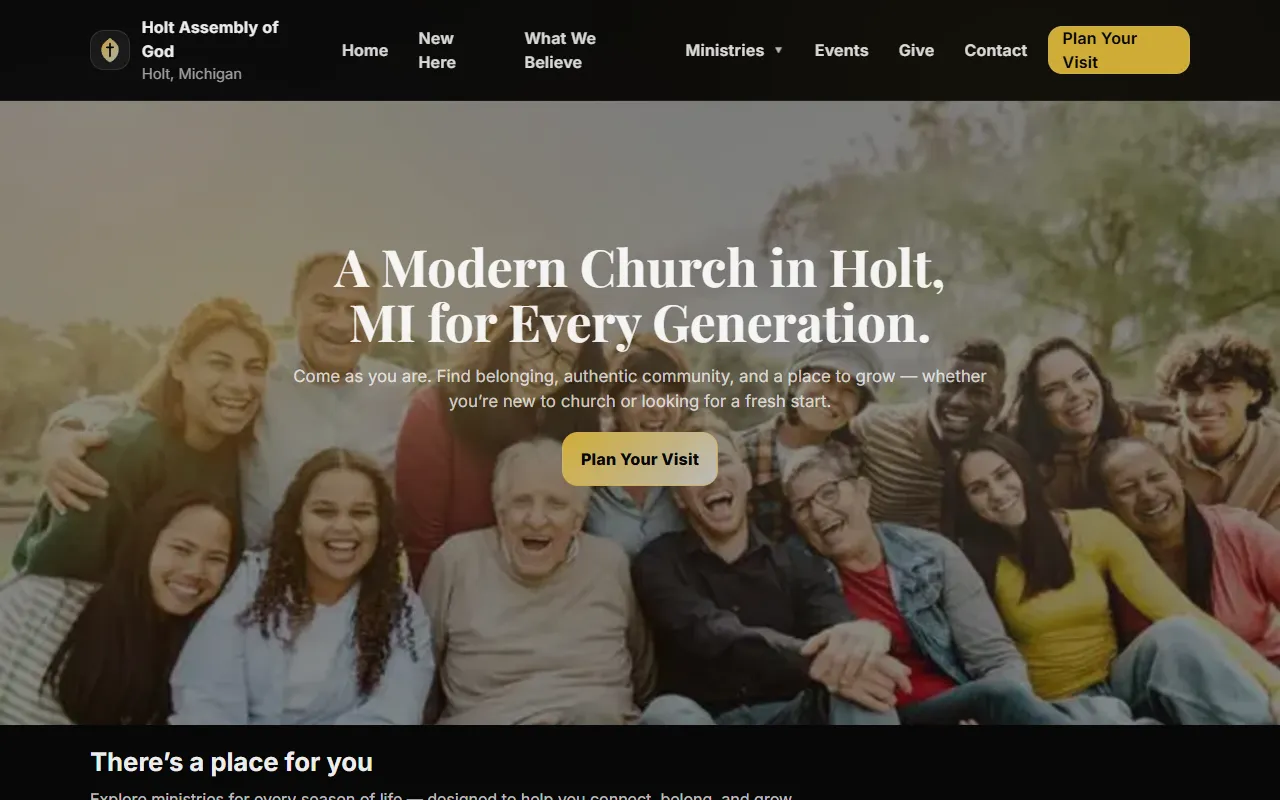
Church / Community
Holt, Michigan
Local visibility launch
From no website to a visitor-ready local church presence
Holt Assembly
A church website launch showing how Holt Assembly gained a real public presence, clearer first-visit guidance, and stronger support for Google Maps visibility in Holt.
- Shows how a blank-slate local presence can become easier to find and easier to trust
- Demonstrates visitor-first planning through service info, directions, and ministry routing
- Useful reference when local discovery and first-visit clarity matter more than flashy design
MarketLocal
Primary focusVisibility + trust
Read time~6 min
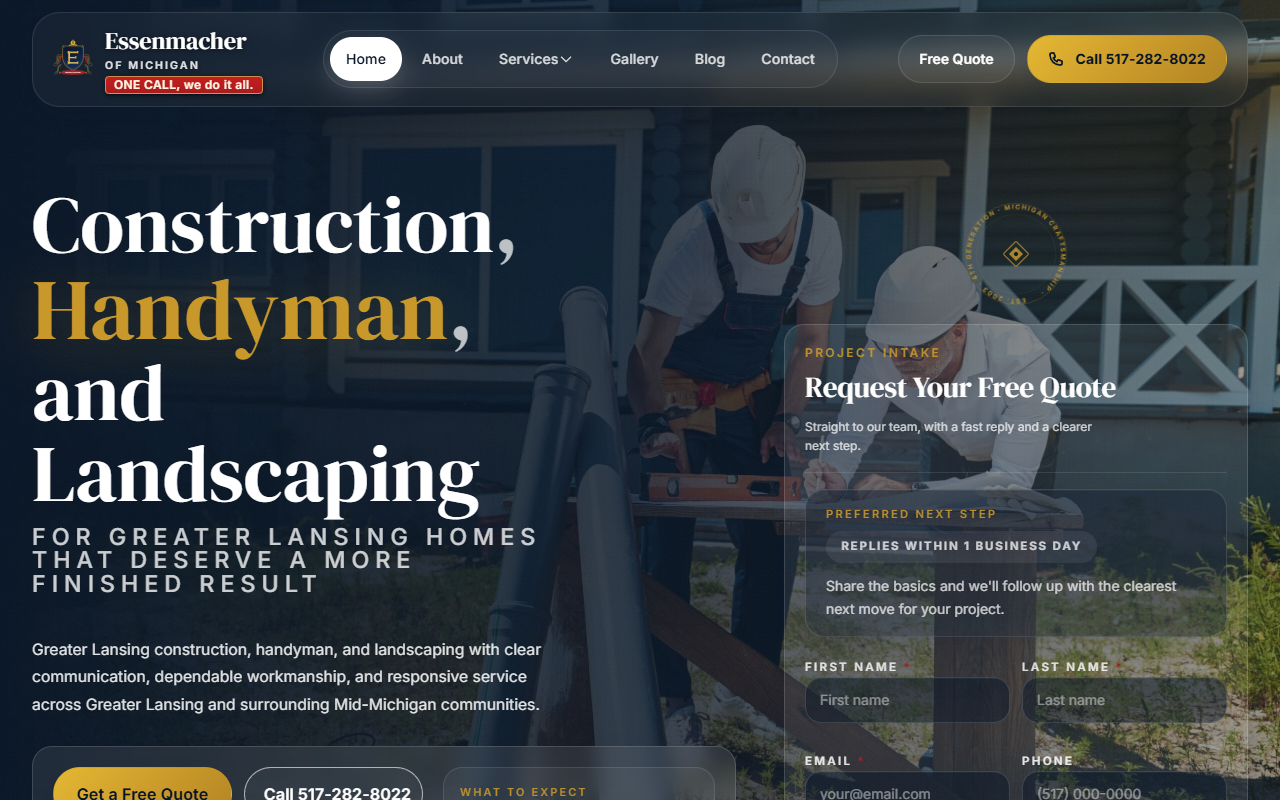
Construction / Home Services
Greater Lansing
Trust-first redesign
From generic brochure to trust-first local brand
EOFM / Essenmacher
A contractor website redesign that moved Essenmacher of Michigan away from a templated Squarespace presence and into a clearer, more credible local service brand with stronger accountability.
- Shows how clearer service framing changes buyer confidence
- Demonstrates stronger CTA staging and trust signals for homeowners
- Useful reference when a local service site feels thin, vague, or too templated
MarketLocal
Primary focusTrust + clarity
Read time~6 min
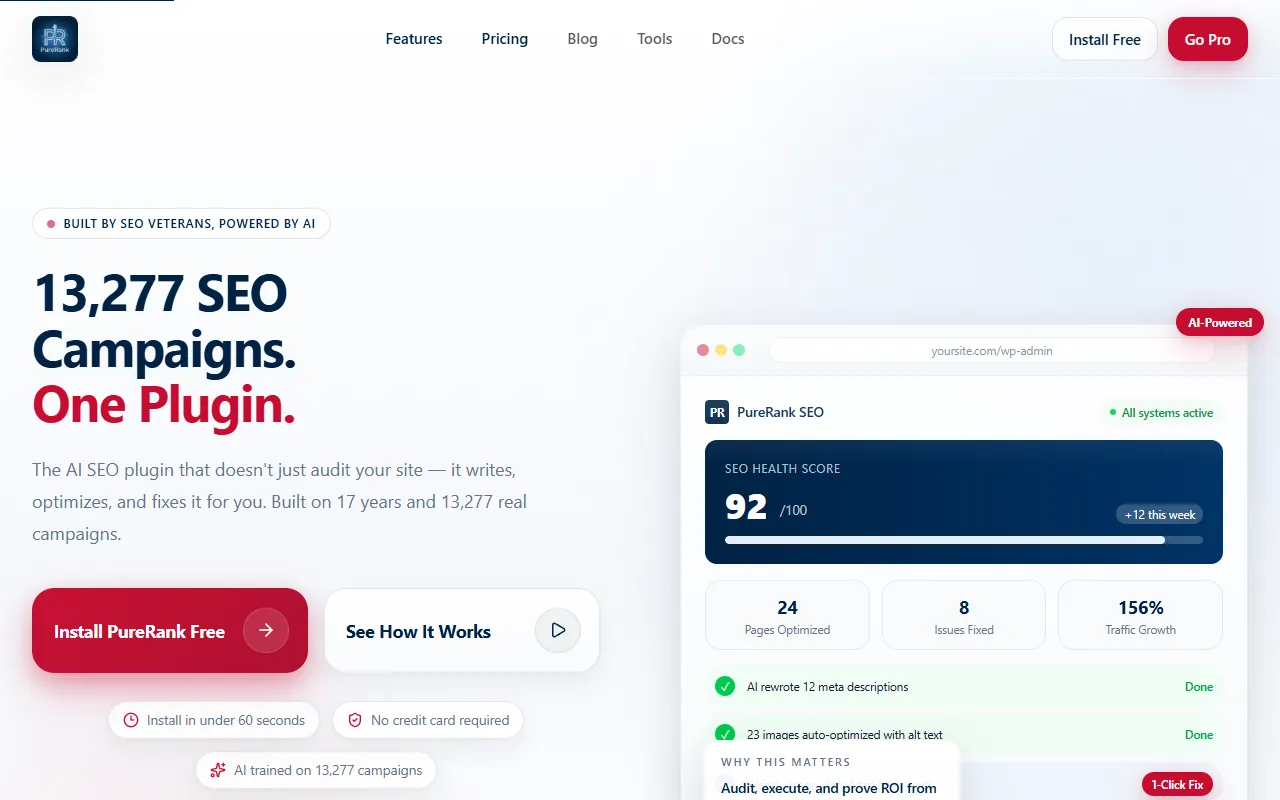
B2B / SaaS
National
Product launch
From category noise to a clearer premium product story
PureRank SEO
A product-launch case study showing how a premium WordPress SEO plugin site was structured to explain the offer faster, differentiate against incumbents, and support Free, Pro, and Premium buyer paths with less friction.
- Shows how a more complex software product can be staged without homepage clutter
- Demonstrates clearer premium justification through workflows, comparison pages, and trust depth
- Useful reference when pricing segmentation and buyer education need to work together
MarketNational
Primary focusClarity + premium fit
Read time~6 min

B2B / SaaS
National
Workflow launch
From backlink spreadsheet sprawl to a clearer operating surface
LinkCheck
A product-launch case study showing how a backlink-tracking SaaS site was structured to make status clarity, ownership, and next-step workflow easier to understand from the first visit.
- Shows how workflow-heavy software can feel simpler without overselling the product
- Demonstrates clearer plan staging for Free, Team, and Portfolio buyer paths
- Useful reference when a SaaS homepage needs operational trust more than feature-list noise
MarketNational
Primary focusWorkflow clarity
Read time~6 min
Best next step
Once a case study feels close, move to the proof layer that answers what is still unresolved
Want to inspect the finished execution?
Go to the portfolio next to review live desktop and mobile presentation without losing the strategic context you just read.
Want to understand launch risk and support?
Review the guarantee terms next for timing, post-launch coverage, and performance expectations.
Want to map your own redesign?
Bring the closest case study into a consultation and use it to anchor the scope, priorities, and launch path conversation.
Common follow-up questions
How should buyers use this web design proof library?
Do these examples match every kind of business?
No. The point is not to find an identical business. It is to evaluate how the work improves trust, structure, positioning, and next-step clarity in different buying environments.
Should I look at the case studies or the portfolio first?
Use the case studies first if you care about the reasoning behind the build. Use the portfolio first if you want to inspect the finished execution. Serious buyers usually review both.
What is the best next step if one of these feels close to my situation?
Once a case study feels relevant, compare the web design service page and then book a consultation if you want help mapping the right redesign path for your site.
Need this for your site?
If your website undersells the business behind it, we can fix that.
Bring the current site, the trust gap you want to close, and the case study that feels closest to your situation. We can map the right redesign direction without turning the conversation into agency theater.